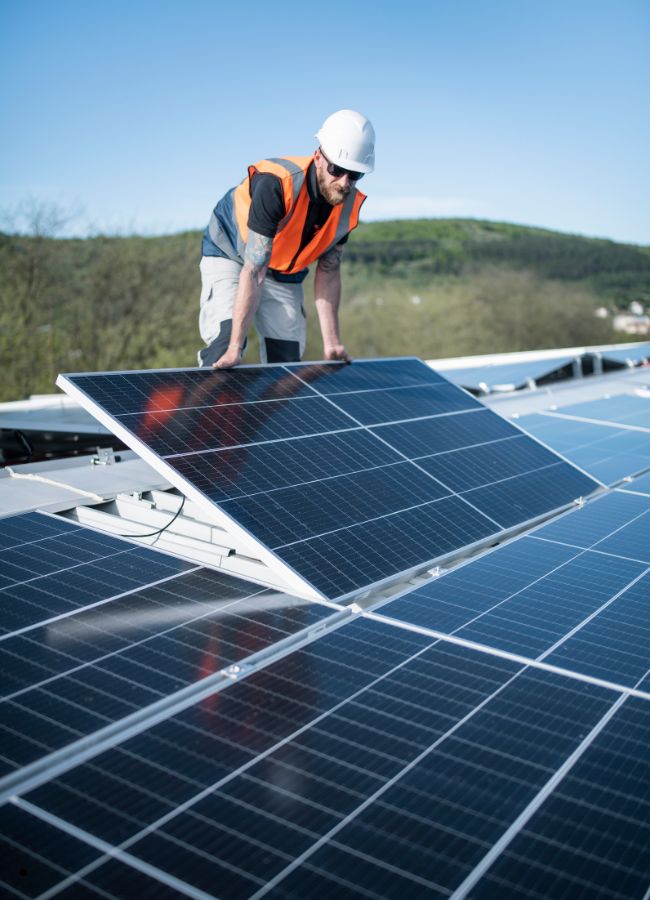
Solar panel inverters are essential for utilizing solar energy by converting the direct current (DC) generated by solar panels into the alternating current (AC) needed to power our homes and places of business, where our solar panel inverters come into the picture. These devices play a crucial role in maximizing the efficiency and effectiveness of solar energy utilization. Solar inverters not only facilitate the integration of solar power into existing electrical grids but also ensure optimal power output and safety.
They provide features such as voltage regulation, power factor correction, and anti-islanding protection. With advancements in technology, they are becoming more efficient, compact, and capable of monitoring system performance in real-time, contributing to the widespread adoption of renewable energy.
With the availability of so many brands, it is quite obvious for you to get confused. This blog will explore some of the Best Solar Inverters in Australia.
What are some of the Best Solar Inverters in Australia?
The “best” solar inverters in Australia typically fall into categories based on budget and technology, but all top choices must be Clean Energy Council (CEC) approved. Fronius (often the top choice by installers) and SMA are considered premium European brands, known for their exceptional reliability, high efficiency, and strong after-sales support.
Alternatively, systems like SolarEdge (with power optimisers) and Enphase (micro-inverters) are highly rated for their ability to maximise energy production on complex or shaded roofs. Finally, brands like Sungrow and GoodWe offer a robust balance of high efficiency, strong warranties, and competitive pricing, making them excellent value options for most standard residential installations.
Let us explore some of the best brands for solar inverters in Australia for solar panels installation.

Fronius
Due to their remarkable performance and dependability, Fronius solar inverters have significantly increased in popularity in the solar energy sector in Australia and are considered one of the best solar inverters. With a significant local presence, Fronius provides a selection of inverters made to specifically address the requirements of solar systems in Australia. Due to the excellent conversion efficiency of these inverters, companies and homeowners can maximise their energy output while reducing their reliance on the grid.
They are renowned for their sophisticated monitoring features, which allow users to follow data on energy production and consumption in real-time. Additionally, they offer outstanding warranty services and customer support, giving Australian solar system owners peace of mind.
Growatt
In the Australian solar sector, Growatt solar inverters have built a strong reputation and have gained the respect of both homeowners and professionals as the best solar inverter. Growatt, being one of the best solar inverters manufacturers, are renowned for their remarkable performance and dependability.
They are built to maximise energy conversion and improve total system efficiency. Growatt provides inverters appropriate for household, commercial, and utility-scale installations in a wide variety of models. With the use of user-friendly interfaces, these inverters’ sophisticated monitoring capabilities enable users to remotely monitor and control their solar systems. Additionally, they place a high priority on client happiness by offering quick technical assistance and trustworthy warranty services, guaranteeing Australian users a simple and hassle-free solar experience.
Solis Inverters
In the Australian solar market, Solis inverters have become quite well-liked due to their dependability, effectiveness, and cost. Solis provides inverters appropriate for residential, commercial, and industrial applications with a significant presence and a broad range of models. Due to their excellent conversion efficiency, these inverters allow for the best possible energy generation from solar panels.
The comprehensive monitoring and control features of these inverters also enable customers to remotely monitor system performance and make modifications as necessary. With an emphasis on customer satisfaction, Solis offers exceptional technical assistance as well as a strong warranty programmer, giving Australian solar system owners piece of mind.
Goodwe
GoodWe is a business that consistently works on brand building. Since the company’s founding, quality, service, and affordable items have helped to elevate the brand. With their exceptional single-phase and three-phase models as solar suppliers, GoodeWe has earned a name for itself in the global solar inverter market. Due to achieving Double A ratings in the prestigious Photon Test, the single-phase inverters GW4000-SS and GW17K-DT have received considerable attention.
This accomplishment strengthens their global leadership in the residential and commercial sectors. The GW4000-SS and GW17K-DT were rated highly for efficiency, dependability, and performance in the thorough testing process, which also considered other factors.
GoodWe provides dependable, highly efficient inverters. Even in difficult circumstances, these inverters’ superior MPPT tracking technology ensures maximum power generation from solar panels.
HUAWEI
With more than 30 years of combined digital technology experience, Huawei Inverter provides cutting-edge Smart PV solutions for effective and thoughtful solar energy utilisation. They further combine numerous cutting-edge ICT technologies with PV for optimal power generation by integrating AI and the cloud. This makes the solar power plant highly efficient, safe, and reliable with the ability to support the grid and lays the groundwork for solar to take over as the primary energy source.
Huawei introduced a sophisticated solar energy solution for C&I and residential clients based on the idea of “Optimal Electricity Cost and Active Safety.” These inverters have contributed to the global powering of millions of residents and hundreds of companies by enhancing the use of solar energy. Huawei will keep innovating and enabling renewable energy to empower every person, every home, and every business.

In today’s times, solar energy is considered as the primary source of clean electricity as more and more people are making the switch to renewable energy. Thus by serving as a bridge between solar panels and electrical appliances, our best solar inverters in Australia ensure the effective use of solar energy.
Quick Advice (Summary)
- Pick the inverter type (string / micro / hybrid) based on your roof layout, shading, and whether you plan battery storage.
- Prioritize efficiency, warranty, Australian support and approvals over lowest price.
- For future-proofing (batteries, expansion), go with hybrid-ready or optimised systems.
- For simple roofs with good sun and no plans for storage, a good string inverter is often the best value.
- Always check that the inverter is compliant with Australian grid and safety standards.
In Conclusion :
Choosing the right solar panel inverter is critical to maximising the performance, longevity and financial return of your solar system in Australia. From leading brands to cutting-edge features like hybrid capability, smart monitoring and supported warranties, the best inverters deliver reliability and efficiency.
By prioritising compatibility with your panels, matching the inverter size to your system and selecting products backed by excellent support and service networks, you’ll ensure your investment pays off. Whether you’re installing a new solar system or upgrading an existing one, the right inverter puts you in control of your solar energy future, delivering savings, resilience and peace of mind for years to come.
FAQs on Solar Panel Inverters for Australian Homes
Q1: What does a solar inverter do?
A solar inverter converts the DC (direct current) electricity produced by your solar panels into AC (alternating current) electricity that your home appliances and the grid use. Some inverters also help charge batteries or provide backup power, known as hybrid inverters.
Q2: What types of solar inverters are available, and how do I choose between them?
The main inverter types are:
String inverters — One inverter for a group (string) of panels. Good for standard roofs with minimal shading. Cost-effective and simple.
- Microinverters — Small inverters attached to each individual panel. Excellent when you have a roof with different slopes/orientations or partial shading. Panel-level independence ensures one shaded panel doesn’t drag down the rest.
- String inverter + Power optimisers — A hybrid of sorts: optimisers under each panel + a central inverter. Cheaper than microinverters, but can improve performance compared to a plain string inverter when shading or orientation varies.
- Hybrid inverters — Combine a solar panel inverter + battery (storage) inverter in one unit. Ideal if you plan to add battery storage now or later.
- Off-grid / standalone inverters — For properties not connected to the grid. Handle solar + battery + possibly generator — useful in remote areas.
Which to pick?
- If your roof gets good, uniform sunlight and is simple → string inverter.
- If roof has shading / multiple slopes / partial sun, or you want max power from each panel → microinverters or optimisers.
- If you want battery backup (now or future) → hybrid inverter.
- If you are off-grid → standalone/off-grid inverter.
Q3: What factors should I consider when choosing a solar inverter?
Here are the key criteria:
- Efficiency, Look for inverters with high conversion efficiency (ideally > 95%). Higher efficiency means less energy lost during DC → AC conversion.
- Warranty & support / manufacturer reliability, A longer warranty (e.g. 5–10 years or more) plus local support/service presence in Australia adds confidence and security.
- Compatibility with local grid standards / certification, In Australia, the inverter must meet relevant standards (e.g. grid-connect certification) to ensure safety and to qualify for incentives or grid-connection approval.
- System design and roof layout, Roof shape, shading, orientation, and planned expansions/batteries influence whether you go for string, microinverter, hybrid, etc.
- Monitoring & smart features, Some inverters offer monitoring tools, historical production data, remote access, or battery-management features useful long term.
- Budget vs long-term value, Cheaper inverters may save upfront, but premium / hybrid / more efficient ones may deliver better ROI over the years, especially in harsh climates or if future-proofing with batteries.
Q4: Which inverter brands or models are considered among the best in Australia?
Based on installer surveys, market reviews and expert guides, popular and strongly rated inverters include:
- Fronius (especially the “GEN24 / Primo” series) — premium, very reliable, good for Australian climate, hybrid-ready.
- Sungrow — good value for money, efficient (~98%), battery-ready hybrid options, widely supported in Australia.
- SolarEdge — especially when used with panel-level optimisers; ideal for shaded roofs, high efficiency and advanced monitoring.
- Enphase (microinverters) — best suited for complex roofs or shading, strong warranties and good long-term reliability.
- Other brands (e.g., Solis, Growatt, possibly GoodWe) — sometimes chosen for affordability and acceptable performance, especially for budget-conscious buyers.
Q5: Should I choose a microinverter system or a string inverter (with or without optimisers)?
It depends on your roof and priorities.
Choose microinverters (or optimisers + string inverter) if:
- Roof panels have different orientations or slopes.
- Part of your roof gets shading (trees, chimneys, towers).
- You want better panel-level monitoring and maximum energy output per panel.
- You might expand or reconfigure panels later.
Choose a basic string inverter if:
- Your roof layout is simple and sunny, with minimal shading.
- You want a lower-cost, simpler system.
- You’re not planning battery storage or sophisticated monitoring.
Hybrid/string + optimiser is a middle ground that offers some panel-level flexibility at a lower cost than full micro.
Q6: How long do solar inverters last? Do they need replacement sooner than panels?
Solar inverters are often the component that needs replacement before the solar panels themselves. Many string/micro/hybrid inverters have useful lifespans of 10–15 years (depending on build quality, climate, and maintenance).
That’s why robust warranty, local support and serviceability are important when selecting an inverter.
Q7: If I plan to add a battery later, what kind of inverter should I choose now?
If you think you may want battery storage (for backup or energy arbitrage), it’s wise to choose a hybrid-ready inverter now. Hybrid inverters or hybrid-capable models from known brands make it easier to integrate battery later without replacing the entire inverter. This gives flexibility for future upgrades and can save cost in the long run.
Q8: Do I need to worry about Australian Standards or approvals when buying an inverter?
Yes, absolutely. Solar inverters used in grid-connected PV systems must comply with Australian standards and relevant grid-connection requirements.
Make sure your installer uses an inverter from the approved list (for example, from the Clean Energy Council (CEC) approved list) so that the installation is legal, safe and eligible for any rebates/incentives.